In recent years, Online Quran Teacher platforms have become a major part of Islamic education for students around the world.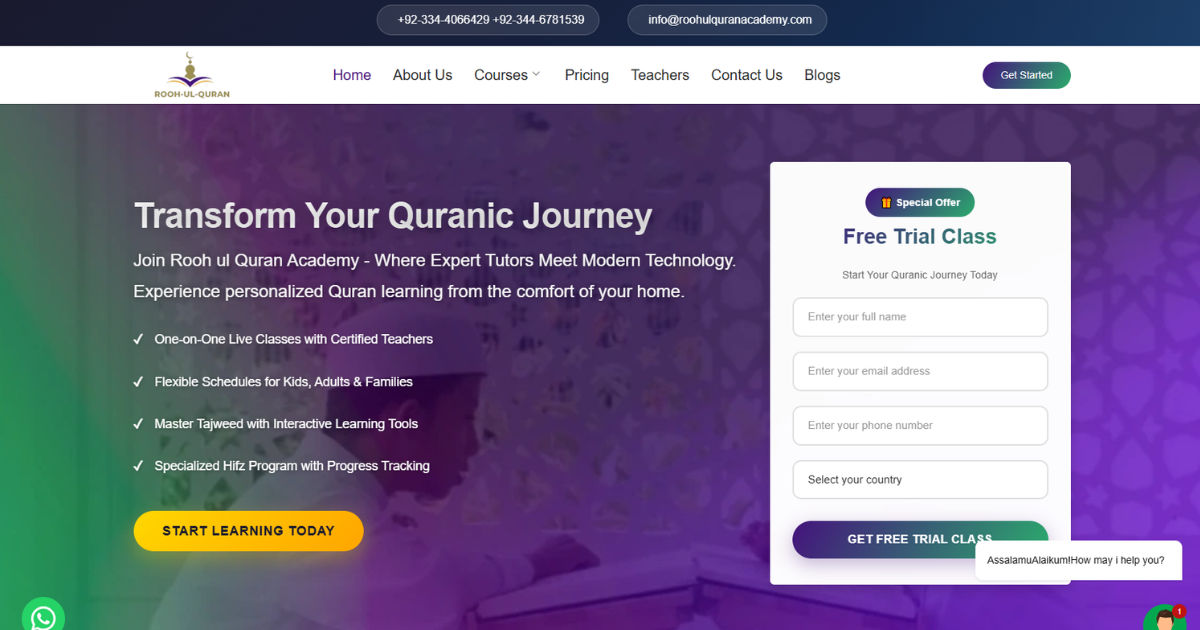
The demand for Online Quran Teacher services has grown rapidly because learners now want flexible, accessible, and personalized ways to study the Quran.
Many families are now comparing modern digital classes with traditional mosque-based or in-person learning systems to decide which method works best for them.
This guide explains in detail how remote Quran learning compares to traditional learning. We will explore teaching quality, student experience, accessibility, discipline, costs, and overall effectiveness.
Throughout this discussion, the role of an Online Quran Teacher will be highlighted as a central part of modern Quran education.
Quran Learning Methods
Traditional Quran Learning
Traditional Quran learning usually takes place in mosques, madrasas, or under a local teacher. Students physically attend classes and sit face-to-face with their instructor. Memorization, recitation, and tajweed rules are taught in a structured environment.
In this setup, discipline is strict, and students often follow a fixed schedule. Many learners rely on repetition and group learning to strengthen their recitation skills. However, access to a qualified teacher may depend on location.
An Online Quran Teacher is different in approach but often teaches the same core principles through digital platforms.
Remote Quran Learning
Remote Quran learning happens through digital tools such as video calls, apps, and online classrooms. A student connects with an Online Quran Teacher from anywhere in the world. Lessons are conducted one-on-one or in small groups using platforms like Zoom, Skype, or dedicated learning apps.
This system allows flexibility in timing, location, and learning pace. Students can choose an Online Quran Teacher based on qualification, teaching style, or language preference.
Accessibility and Convenience
Traditional Learning Access
Traditional Quran learning requires physical presence. Students must travel to a mosque or madrasa, which may not always be possible due to distance, weather, or safety concerns. In some regions, there is also a shortage of qualified teachers.
Remote Learning Access
Remote learning removes these barriers completely. A student only needs an internet connection to connect with an Online Quran Teacher. This makes Quran education accessible to people living in remote areas or non-Muslim countries.
Parents also find it easier to manage schedules when an Online Quran Teacher is available online, especially for children with school commitments.
The convenience of learning from home is one of the biggest reasons for the popularity of Online Quran Teacher services.
Flexibility in Learning Schedule
Fixed Timings in Traditional Classes
Traditional Quran classes usually follow fixed timings. Students must attend at specific hours, which may clash with school, work, or family responsibilities. Missing a class can result in falling behind.
Flexible Online Learning
With remote learning, flexibility is a key advantage. An Online Quran Teacher often provides multiple time slots, allowing students to choose what suits them best.
This flexibility helps working adults, busy parents, and students who live in different time zones. The ability to reschedule lessons easily makes learning less stressful.
Many learners prefer an Online Quran Teacher for this exact reason.
Teaching Quality and Personalization
Traditional Group Learning
In traditional settings, teachers often manage multiple students at once. While this encourages group discipline, it may reduce one-on-one attention. Some students may not receive enough correction in recitation or tajweed.
Personalized Online Learning
An Online Quran Teacher usually focuses on individual students. Lessons are often private, allowing teachers to identify mistakes quickly and correct them in real time.
This personalized attention helps students improve faster in pronunciation, memorization, and understanding of Quranic rules. A skilled Online Quran Teacher can adjust teaching methods based on student level.
Learning Environment and Focus
Traditional Classroom Environment
In mosques or madrasas, the environment is structured and disciplined. Students sit together, which can encourage motivation. However, distractions may also occur due to group size or noise levels.
Home-Based Online Environment
With remote learning, students study in a comfortable home environment. An Online Quran Teacher guides them individually, which can improve focus.
However, home distractions can sometimes reduce concentration. Successful learning depends on discipline and parental support, especially for children learning from an Online Quran Teacher.
Cost Comparison
Traditional Learning Costs
Traditional Quran education is often affordable or free in many communities. However, additional costs may include transportation, uniforms, or materials.
Online Learning Costs
An Online Quran Teacher may charge tuition fees based on experience and qualification. While this can sometimes be higher than traditional settings, it eliminates travel costs and saves time.
Many families find that hiring an Online Quran Teacher is still cost-effective when considering convenience and quality.
Teacher Availability and Expertise
Local Teacher Limitations
In traditional systems, students are limited to local teachers. The availability of highly qualified instructors may be restricted depending on the region.
Global Access to Teachers
One major advantage of an Online Quran Teacher is global access. Students can learn from certified teachers across different countries, cultures, and Islamic institutions.
This increases the chances of finding a teacher who matches the student’s learning style. Many learners choose an Online Quran Teacher for better expertise and specialization.
Technology in Quran Learning
Traditional Methods
Traditional Quran learning relies mainly on oral teaching, repetition, and physical books like the Mushaf. While effective, it lacks digital enhancement tools.
Digital Learning Tools
An Online Quran Teacher often uses screen sharing, digital whiteboards, audio recitation tools, and recorded sessions. These tools improve understanding and help students review lessons anytime.
Technology allows an Online Quran Teacher to track progress and provide structured feedback.
Student Engagement and Motivation
Traditional Motivation
In physical classrooms, peer pressure and group discipline can motivate students. Teachers maintain strict supervision, which helps students stay consistent.
Online Engagement
An Online Quran Teacher uses interactive methods such as quizzes, recitation checks, and progress tracking. However, motivation depends more on self-discipline in remote learning.
Parents often play an important role in keeping children engaged with an Online Quran Teacher.
Safety and Comfort
Traditional Travel Concerns
Students attending traditional classes may need to travel, sometimes late in the evening or through unsafe areas.
Learning from Home
With an Online Quran Teacher, students learn safely from home. This is especially important for young children and female learners in conservative households.
Safety is one of the strongest advantages of using an Online Quran Teacher system.
Learning Speed and Progress
Traditional Pace
In traditional learning, the pace is often fixed for the whole group. Some students may feel left behind if they need more time.
Adaptive Online Pace
An Online Quran Teacher can adjust lessons according to individual progress. Fast learners can move ahead quickly, while slow learners can repeat lessons without pressure.
This adaptive learning model makes an Online Quran Teacher more efficient for personalized education.
Cultural and Social Interaction
Traditional Social Learning
Traditional classes provide strong social bonding. Students interact physically, build friendships, and learn in a community environment.
Online Interaction
An Online Quran Teacher offers limited physical interaction but still allows communication through video calls and discussions. While social bonding is reduced, learning efficiency often increases.
Some students combine both methods while learning from an Online Quran Teacher and attending local religious gatherings.
Discipline and Self-Control
Structured Traditional Discipline
Traditional learning builds discipline through strict schedules and physical attendance. Students are monitored directly by teachers.
Self-Discipline in Online Learning
Learning with an Online Quran Teacher requires more self-control. Students must attend sessions on time and stay focused without physical supervision.
Parents and guardians often support younger students learning from an Online Quran Teacher to maintain discipline.
Challenges of Both Systems
Traditional Learning Challenges
- Limited access in rural areas
- Fixed schedules
- Larger class sizes
- Less personalized attention
Online Learning Challenges
- Dependence on internet connection
- Screen fatigue
- Requires self-discipline
- Possible technical issues
Even with these challenges, many families still prefer an Online Quran Teacher due to flexibility and accessibility.
Which Method Is Better?
There is no single answer. Both systems have strengths and weaknesses. Traditional learning is deeply rooted in community-based education and discipline. However, modern learners increasingly prefer an Online Quran Teacher due to flexibility, personalization, and global access.
In many cases, a blended approach works best, combining traditional values with the convenience of an Online Quran Teacher.
Role of Parents in Quran Learning
Parents play a crucial role in both systems. In traditional learning, they ensure attendance and discipline. In online learning, they help children stay focused during sessions with an Online Quran Teacher.
Parental involvement greatly improves the success rate of students learning from an Online Quran Teacher.
Future of Quran Education
The future of Quran learning is evolving. Technology continues to improve, and more students are turning to an Online Quran Teacher for structured and flexible education.
Artificial intelligence tools, interactive apps, and virtual classrooms may further enhance the role of an Online Quran Teacher in coming years.
However, traditional learning will always remain important for cultural and spiritual development.
Conclusion
Both remote Quran learning and traditional learning have their unique strengths. Traditional methods offer discipline, community bonding, and face-to-face guidance. On the other hand, an Online Quran Teacher provides flexibility, global access, personalized learning, and modern tools that make Quran education more accessible than ever before.
For many modern learners, especially those with busy schedules or limited access to Islamic institutions, an Online Quran Teacher is an ideal solution. It bridges the gap between traditional Islamic education and modern technology, ensuring that the teachings of the Quran remain accessible to everyone, everywhere.
Ultimately, the best approach depends on individual needs, learning styles, and available resources. In many cases, combining both systems with guidance from an Online Quran Teacher can provide the most balanced and effective learning experience.